Last updated:
Table of contents
- Frequently asked questions about body contouring
- What is body contouring?
- How does body contouring work?
- Who is body contouring suitable for?
- Which body zones can be treated?
- What distinguishes body contouring from classic body forming?
- What should be considered before body contouring?
- How does the treatment work?
- What risks and complications can occur?
- What should be considered after body contouring?
- When will the result be visible?
- How long do the results last?
- Does body contouring have to be repeated?
Frequently asked questions about body contouring
What is body contouring?
Body contouring is an umbrella term for aesthetic procedures that aim to model and define the natural contours of the body in a targeted way. Unlike body forming, where the focus is primarily on tightening the tissue and improving the skin texture, body contouring focuses on the harmonious shaping of individual body zones.
It is not about drastic changes, but about the fine-tuning of proportions, the working out of clear lines and the smoothing of transitions between adjacent regions. The aim is to refine your personal silhouette and to improve the body's appearance gently but effectively.
How does body contouring work?
In body contouring, various treatment methods are available depending on the starting situation. Proven procedures include, for example, classic liposuction, modern radiofrequency-assisted techniques such as BodyTite, FaceTite or QuantumRF as well as minimally invasive methods such as Morpheus8 or Cryolipolysis, in which fat cells are broken down through the targeted application of cold.
In some cases, surgical procedures such as skin tightening or combined treatments are also used, for example as part of a Mommy Makeover or Meno Makeover. Often several areas are treated at the same time in order to achieve a particularly harmonious and holistic result.
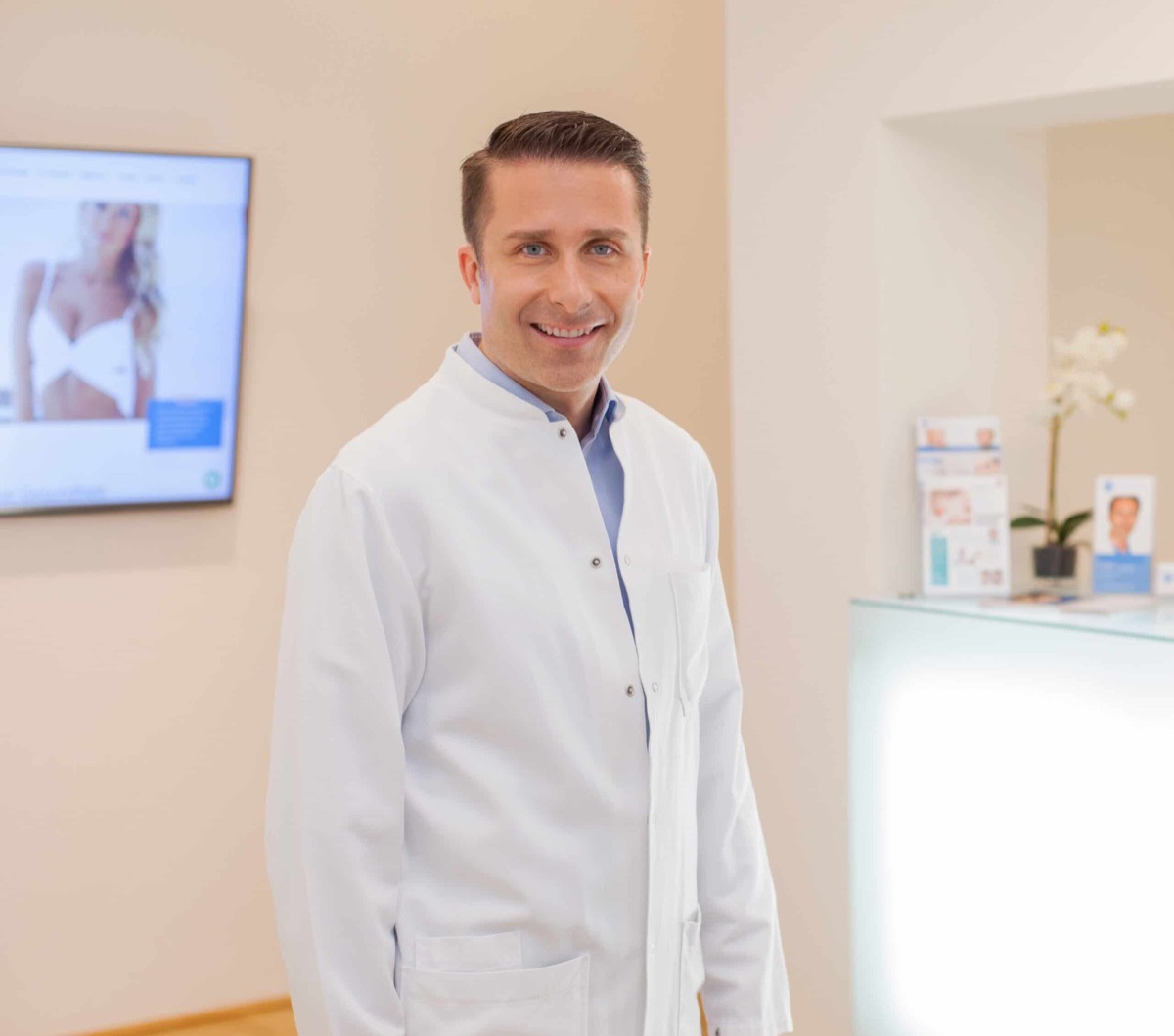
Lecturer Dr. Matiasek always selects the method individually, tailored to your needs, your anatomy and your aesthetic goals.
Who is body contouring suitable for?
Body contouring is aimed at patients who feel uncomfortable with certain areas of their body despite a healthy lifestyle. Uneven proportions are often caused by genetic predisposition, hormonal changes, pregnancies or significant weight loss. Even with consistent training and a balanced diet, certain fat deposits or slackened areas remain.
If you would like a more defined silhouette, smoother transitions between the body zones or an emphasis on certain contours, body contouring may be exactly the right solution for you. The procedures are particularly suitable for people who are not looking for a radical change, but would like to improve their appearance in a targeted and natural way.
Which body zones can be treated?
Body contouring offers numerous options for shaping and tightening various areas of the body in a targeted way or harmonising their proportions. The abdomen, waist and flanks are treated particularly frequently, as stubborn fat deposits can persist in these zones despite diet and exercise. With the help of procedures such as liposuction, BodyTite, QuantumRF or supplementary skin tightening, the midsection can be more clearly defined again and the waist visually emphasised.
The back, particularly in the area of the bra line, is also one of the regions in which many female patients notice small, bothersome rolls or soft transitions. Targeted body contouring can achieve a smoother, firmer appearance here.
Another classic area of application is the upper arms and thighs. On the inner side of these regions in particular, the natural ageing process or weight loss can lead to slackened tissue. In such cases, a combination of radiofrequency-assisted skin tightening and liposuction may be advisable. Where there is more pronounced excess skin, a surgical lift can also be performed in addition.
On the buttocks, the focus is usually on the contour. Here the aim is to make transitions to adjacent zones such as the hips or thighs more harmonious, to reduce disproportionate volume or to gently emphasise the natural shape.
The chin and neck region is treated in particular when a double chin has formed or the jawline appears less defined. FaceTite or targeted liposuction in combination with skin-tightening procedures can lead to significantly more visible contours here, without the need for a classic facelift.
The shape of the chest and breasts can also be optimised through body contouring. In men with gynecomastia or, in women, after a Breast Augmentation or breast lift the distribution of volume can be adjusted or transitions smoothed, so that the silhouette appears more balanced overall.
What distinguishes body contouring from classic body forming?
The difference between body contouring and body forming lies above all in the focus and the intensity of the methods. While body forming tends to use gentle, non-invasive techniques such as cryolipolysis or radiofrequency applications to tighten smaller problem areas or improve the skin's appearance, body contouring goes one step further.
Here, the focus is on modelling measures in which the silhouette is actively shaped. These include procedures such as liposuction, surgical skin tightening or the combination of different technologies in order to smooth transitions in a targeted way, balance proportions or aesthetically define individual areas such as the waist, jawline or thighs.
In short, body forming is ideal for refining the skin and body contouring for targeted shaping. Both approaches can be combined with one another excellently for a coherent, natural-looking overall result.
What should be considered before body contouring?
Elaborate preparation is usually not required. What is decisive, however, is a detailed consultation with Lecturer Dr. Matiasek, including 3D animation. In it, your wishes, your physical circumstances and your goals are discussed in detail. Possible pre-existing conditions, allergies or the use of certain medications are likewise taken into account. For example, blood-thinning medication may need to be discontinued before the procedure.
The choice of method, whether surgical or minimally invasive, is made individually and depends on the area to be treated, the extent of the change and your personal expectations. If you decide on a surgical procedure, you will receive all the important information on preparation and aftercare in good time.
How does the treatment work?
Anaesthesia and length of stay depend on the procedure and its extent; larger tightening operations are typically performed under general anaesthesia.
For smaller areas such as the jawline or the flanks, gentle liposuction or a radiofrequency-assisted treatment such as BodyTite, FaceTite or QuantumRF is often sufficient. For larger regions or in cases of more pronounced skin laxity, a surgical lift may also become necessary, for example as part of a body lift, a thigh lift or an upper arm lift.
Before the procedure, the area to be treated is carefully marked, and the anaesthesia is then administered. The actual treatment then begins, whether by introducing radiofrequency energy, by suctioning out fat or by removing excess skin.
Depending on its extent, the procedure takes between 45 minutes and several hours. In most cases, you can leave the practice again on the same day. Even with surgical procedures, only a short stay is generally necessary.
Following the procedure, you will receive recommendations for aftercare, including compression garments or supportive measures such as lymphatic drainage. This promotes the healing process and supports a result that is as even and harmonious as possible.
What risks and complications can occur?
Depending on the method chosen, slight swelling, bruising or a temporary feeling of tightness in the treated area may occur in the first few days after the treatment. Minor numbness or increased sensitivity of the skin are also possible, but usually subside on their own. With surgical procedures such as skin tightening there is, as with any operation, a low risk of wound healing disorders, infections or scarring. However, modern techniques, careful aftercare and Lecturer Dr. Matiasek's many years of experience contribute significantly to minimising possible complications.
What should be considered after body contouring?
With minimally invasive methods such as radiofrequency or cryolipolysis, the recovery time is usually short. With surgical procedures such as liposuction or skin tightening, somewhat more rest may be required. In both cases, Lecturer Dr. Matiasek generally recommends wearing special compression garments for a few days or weeks. These help to reduce swelling, stabilise the tissue and support the skin as it retracts. Physical exertion and intensive sport should be avoided for one to two weeks, depending on the procedure. As a rule, however, you can resume your usual daily routine after just a few days.
When will the result be visible?
The first visible changes usually appear after just a few weeks. The treated area looks smoother, firmer and more harmoniously shaped. Particularly with minimally invasive procedures such as BodyTite, FaceTite, QuantumRF or Morpheus8, however, further improvements occur over the following weeks, as the stimulated collagen production needs time. The final result can often be assessed after three to six months. By then the tissue has fully retracted and the skin structure has been lastingly strengthened.
How long do the results last?
The results of a body contouring procedure are generally permanent, provided that the body weight remains stable. Fat cells that have been removed do not return, and the skin also remains firmer in the long term with a healthy lifestyle and consistent care. Procedures such as radiofrequency or Morpheus8 in particular contribute to lasting skin quality through collagen stimulation. Of course, factors such as age, hormonal changes or renewed weight fluctuations can influence the result over time. With a balanced diet, sufficient exercise and a conscious lifestyle, however, the effects can be preserved in the long term.
Does body contouring have to be repeated?
In most cases, a single treatment per region is sufficient to achieve a convincing result. However, if larger changes are desired or if skin laxity or fat accumulation occurs again over time, for example after several pregnancies or significant weight loss, a repeat treatment may be advisable. Lecturer Dr. Matiasek will discuss this with you personally and develop a long-term concept that is tailored to your aesthetic goals.
Would you like to shape and improve your body contours in a targeted way? Then seek personal advice. Arrange an appointment with Lecturer Dr. Matiasek today and find out which body contouring method is the ideal fit for your starting situation. He will gladly take time for your wishes and answer all your questions in a trusting conversation.