

Last updated:
Table of contents
- Häufige Fragen zu Sulcus nervi ulnaris Syndrom (SNUS, Ellenrindensyndrom) in Wien
- Das Sulcus nervi ulnaris Syndrom ist eine Nervenkompressionserkrankung, die durch Druck auf den Nervus ulnaris in der Nähe des Ellbogens verursacht wird.
- What symptoms does cubital tunnel syndrome cause?
- How is ulnar nerve entrapment at the elbow diagnosed?
- What are the causes of ulnar nerve entrapment?
- What do I have to consider before the operation for sulcus-nervi-ulnaris syndrome?
- What are the treatment options?
- When is an operation advisable?
- How does the operation proceed?
- How long does the procedure take?
- What risks or side effects can occur?
- What do I need to consider after the operation?
- When can I work again?
- How good are the chances of recovery from sulcus nervi ulnaris syndrome?
Häufige Fragen zu Sulcus nervi ulnaris Syndrom (SNUS, Ellenrindensyndrom) in Wien
Das Sulcus nervi ulnaris Syndrom ist eine Nervenkompressionserkrankung, die durch Druck auf den Nervus ulnaris in der Nähe des Ellbogens verursacht wird.
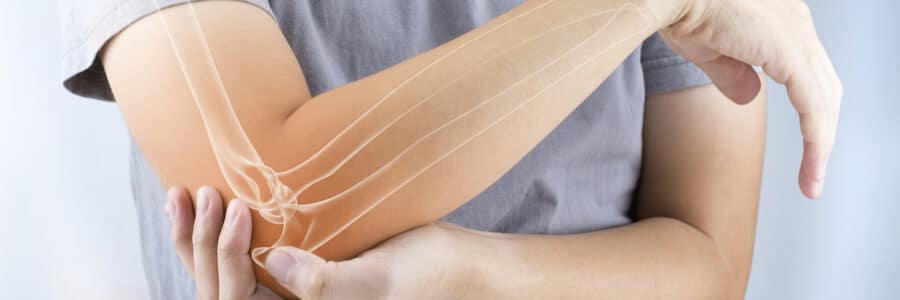
Cubital tunnel syndrome, also known as ulnar groove syndrome, is a narrowing of the so-called ulnar nerve, which runs along the inside of the elbow. This nerve, medically referred to as the ulnaris nerve, is responsible for allowing us to move certain fingers and coordinate hand strength, for example, when gripping, writing, or opening doors. If this nerve is narrowed by pressure or friction, unpleasant symptoms such as numbness, tingling, or pain arise. This mainly occurs in the little finger and parts of the ring finger.
What symptoms does cubital tunnel syndrome cause?
At the beginning, many patients feel tingling or „ants running“ in the ring and little fingers, often accompanied by a feeling of numbness. Waking up at night due to unpleasant sensations or morning stiffness are also typical signs. As the condition progresses, the strength in the affected hand may diminish. Some sufferers report that things fall out of their hands more frequently or that everyday hand movements become increasingly difficult. If the syndrome remains untreated, it can lead to permanent loss of sensation, muscle atrophy and a so-called claw hand. The latter is a deformity in which the little finger and ring finger in particular can no longer be fully extended.
How is ulnar nerve entrapment at the elbow diagnosed?
The first step in diagnosis is a detailed consultation, during which you describe your symptoms. Afterwards, Lecturer Dr. Matiasek specifically examines the nerve pathways and tests for certain irritant reactions. This is usually followed by a so-called electroneurography, in which the nerve conduction velocity (NCV) is measured. In some cases, imaging techniques such as ultrasound or an MRI scan can be helpful, especially if there is suspicion of anatomical stenoses or structural changes.
What are the causes of ulnar nerve entrapment?
The ulnar nerve must pass through several narrow passages on its way from the spinal cord to the hand. The most common compression occurs at the elbow, where the nerve runs through a bony groove further covered by a tight ligament. This passage lies directly beneath the skin, making the nerve particularly sensitive to pressure. Frequent causes of the symptoms include prolonged weight-bearing on the elbow, repeated bending, or mechanical irritation. Previous injuries, bony changes, or scar tissue can also compress the nerve and trigger the symptoms.
What do I have to consider before the operation for sulcus-nervi-ulnaris syndrome?
If blood-thinning medications such as Aspirin, Thrombo ASS or Marcoumar are being taken, these should be discontinued approximately one week before the procedure, in consultation with your GP. Furthermore, it is important that you attend the operation having fasted. Lecturer Dr. Matiasek will also provide comprehensive information on possible risks and complications, ensuring you feel well-prepared and confident.
What are the treatment options?
Not every constriction of the ulnar nerve needs to be operated on straight away. In early stages or with mild symptoms, conservative measures can provide significant relief. These include, for example, special bandages to immobilise the elbow, night splints to prevent the elbow from bending during sleep, as well as anti-inflammatory or nerve-soothing medication. Physical therapies such as targeted stretching and movement exercises can also have a supportive effect. However, if these measures are not sufficient or the symptoms increase, surgical treatment may be necessary.
When is an operation advisable?
An operation is advisable if conservative therapy does not bring the desired success or if the symptoms are already more pronounced, e.g. with persistent numbness, increasing loss of strength or the first signs of paralysis. In such cases, only surgical decompression of the nerve can prevent the symptoms from worsening or permanent damage occurring. The aim of the procedure is to free the nerve from its constriction and to give it more space permanently so that it can recover.
How does the operation proceed?
The procedure is performed as an inpatient and under general anaesthetic. First, Dr Matiasek makes an incision on the inside of the elbow to expose the affected nerve. Depending on the individual anatomy and severity of the constriction, the nerve is either relieved in situ or relocated to a protected area, for example under a muscle or in soft fatty tissue. This prevents the nerve from being constricted again in the future. A drain is then inserted to drain any wound secretions to the outside. The skin is closed with fine sutures and the elbow is immobilised with a light splint to optimally support healing. After waking up from the anaesthetic, Dr Matiasek will discuss the next steps with you, prescribe medication if necessary and plan the first check-up and dressing change.
How long does the procedure take?
The surgical procedure takes approximately one to two hours, depending on the chosen technique and individual anatomical conditions. Afterwards, most patients remain in the clinic overnight for observation before being discharged home.
What risks or side effects can occur?
As with any surgical procedure, there may also be slight side effects after treatment of sulcus nervi ulnaris syndrome. Minor bruising and swelling in the surgical area are completely normal in the first few days. These usually disappear quickly, especially if you regularly loosen the bandage and move your arm carefully. If the swelling is more severe, it may also be helpful to apply cooling compresses. Please ensure that the wound remains dry and that the cooling material does not lie directly on the skin.
The risk of infection is very low. Nevertheless, you should take possible signs such as increasing redness, severe pain, discharge of pus or a noticeable restriction of movement seriously. In such cases, it is important to seek medical advice immediately so that action can be taken quickly.
In extremely rare cases, the ulnar nerve itself may be irritated or injured. The occurrence of a so-called complex regional pain syndrome, also known as sympathetic reflex dystrophy, is also very rare. This is characterised by persistent pain or hypersensitivity in the area of the procedure. However, these complications only occur in exceptional cases and can usually be treated well if they are recognised early.
What do I need to consider after the operation?
After the operation, it is important to rest the operated arm well for the first few days. Immediately after the operation, it is usually immobilised with a light plastic splint. To avoid swelling of the hand and forearm, it is advisable to elevate the arm as much as possible during this time, for example on a pillow close to the upper body.
Slight movements in the elbow joint are permitted from the first day after the operation, but should be carried out very carefully. The skin sutures are removed approximately twelve to fourteen days after the operation. You can then wash your arm normally again as long as the wound has healed completely.
From the third week, cautious movement exercises can usually be started without a splint. It is important that you avoid bending your elbow too much over a longer period of time, e.g. when leaning on a table, so as not to irritate the nerve again. Depending on the findings, physiotherapy or occupational therapy follow-up treatment may also be useful to improve mobility and strengthen the function of the hand.
When can I work again?
How quickly you can return to work depends largely on your job. If your work is predominantly sedentary or administrative, you can often return to work after one to two weeks. If, on the other hand, you work physically or regularly strain your arm, for example by lifting, carrying or monotonous movements, a rest period of four to six weeks may be necessary. Lecturer Dr Matiasek will discuss with you individually when the right time is for you to return to work.
How good are the chances of recovery from sulcus nervi ulnaris syndrome?
The prognosis for sulcus nervi ulnaris syndrome is very good in most cases, especially if the condition is recognised and treated early. Many patients report a significant improvement in their symptoms shortly after the operation. The tingling, numbness and pain often disappear completely over the course of the first few weeks or months.
However, the nerve needs time to regenerate. As the ulnar nerve extends from the elbow to the hand, complete recovery can take several months, especially if there is loss of sensation or strength. In some cases, this process can even take over a year. This is completely normal, as nerve tissue regenerates very slowly.
If there was already significant muscle atrophy before the operation, the strength in the affected hand may only be partially restored. Nevertheless, the operation usually results in a significant functional improvement and the progression of the symptoms is reliably halted.
A renewed constriction of the nerve after the operation is extremely rare. Most patients develop a good body sensation after the operation and make a conscious effort to protect the ulnar nerve in everyday life. Lecturer Dr Matiasek will support you with his experience and an individual aftercare concept that is precisely tailored to your needs.
To summarise: the sooner you take action and have your symptoms medically clarified, the better your chances of a complete and long-term improvement.