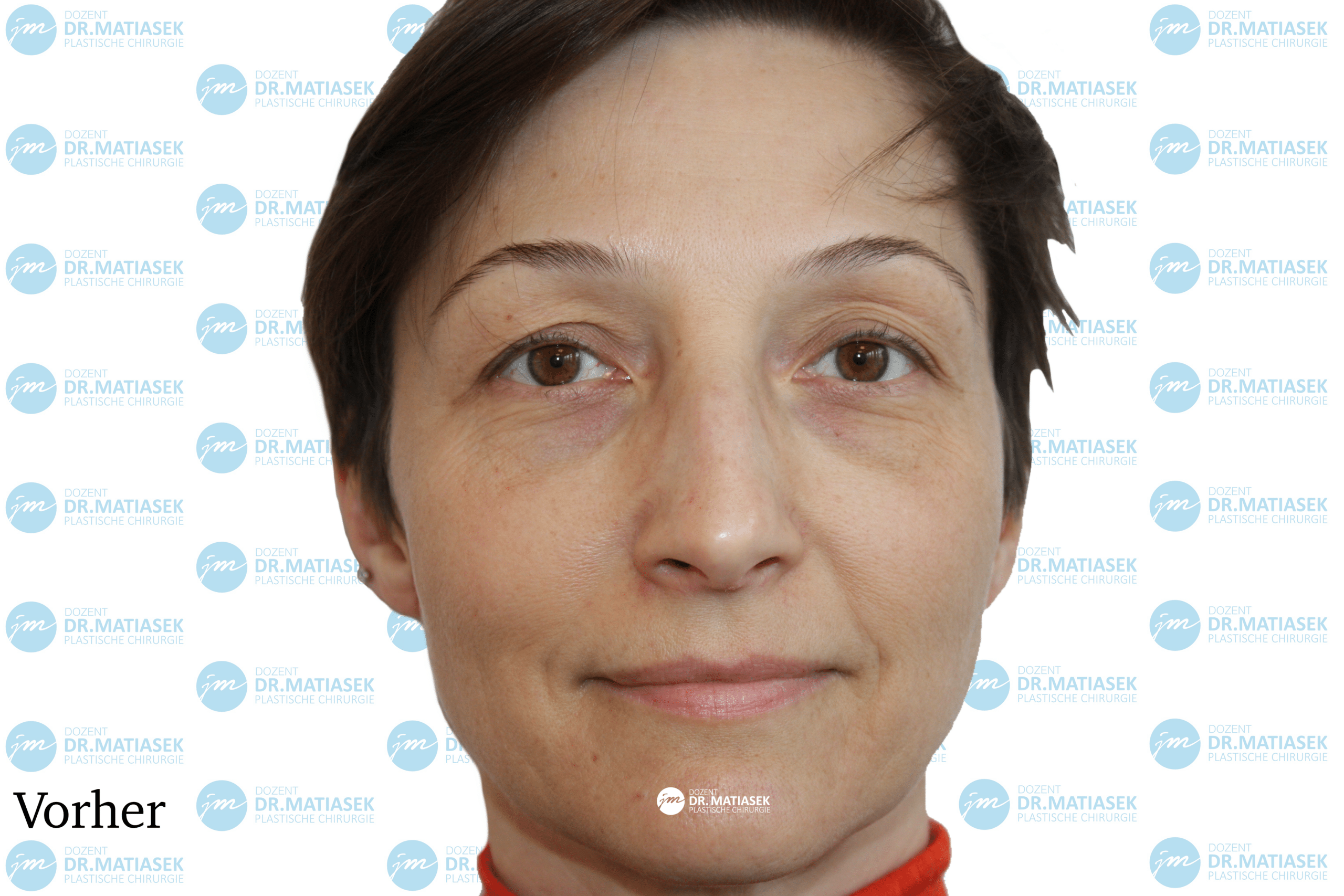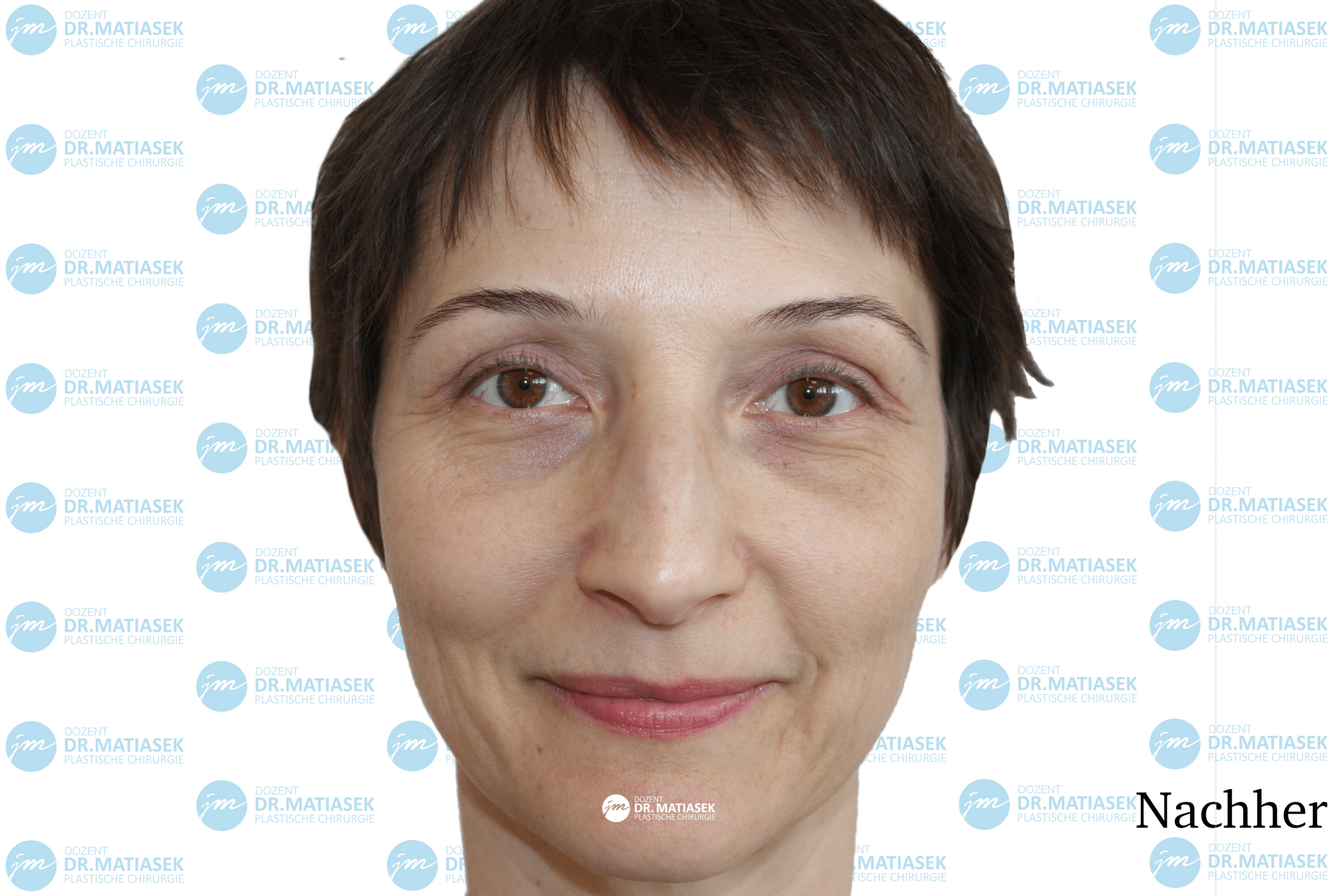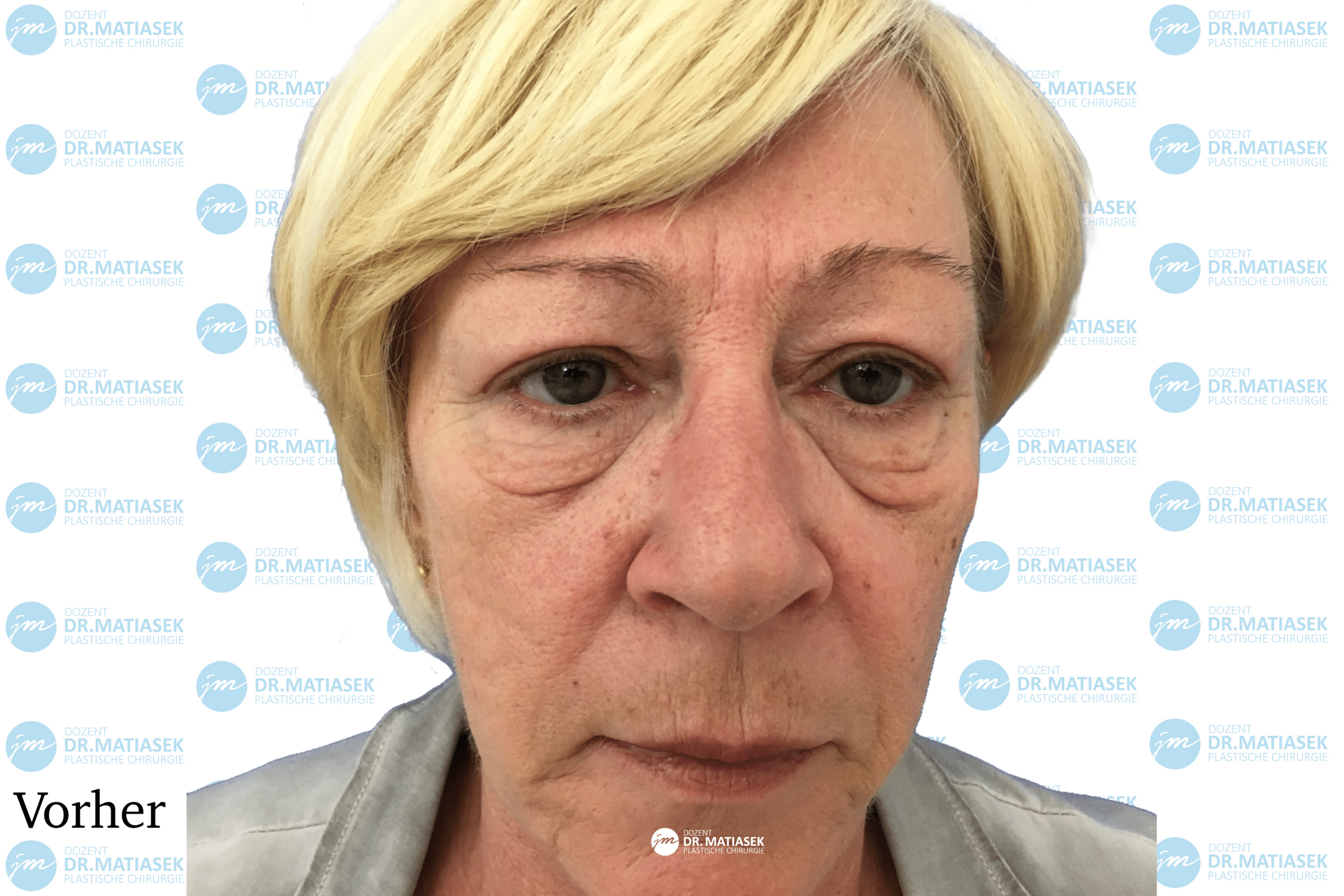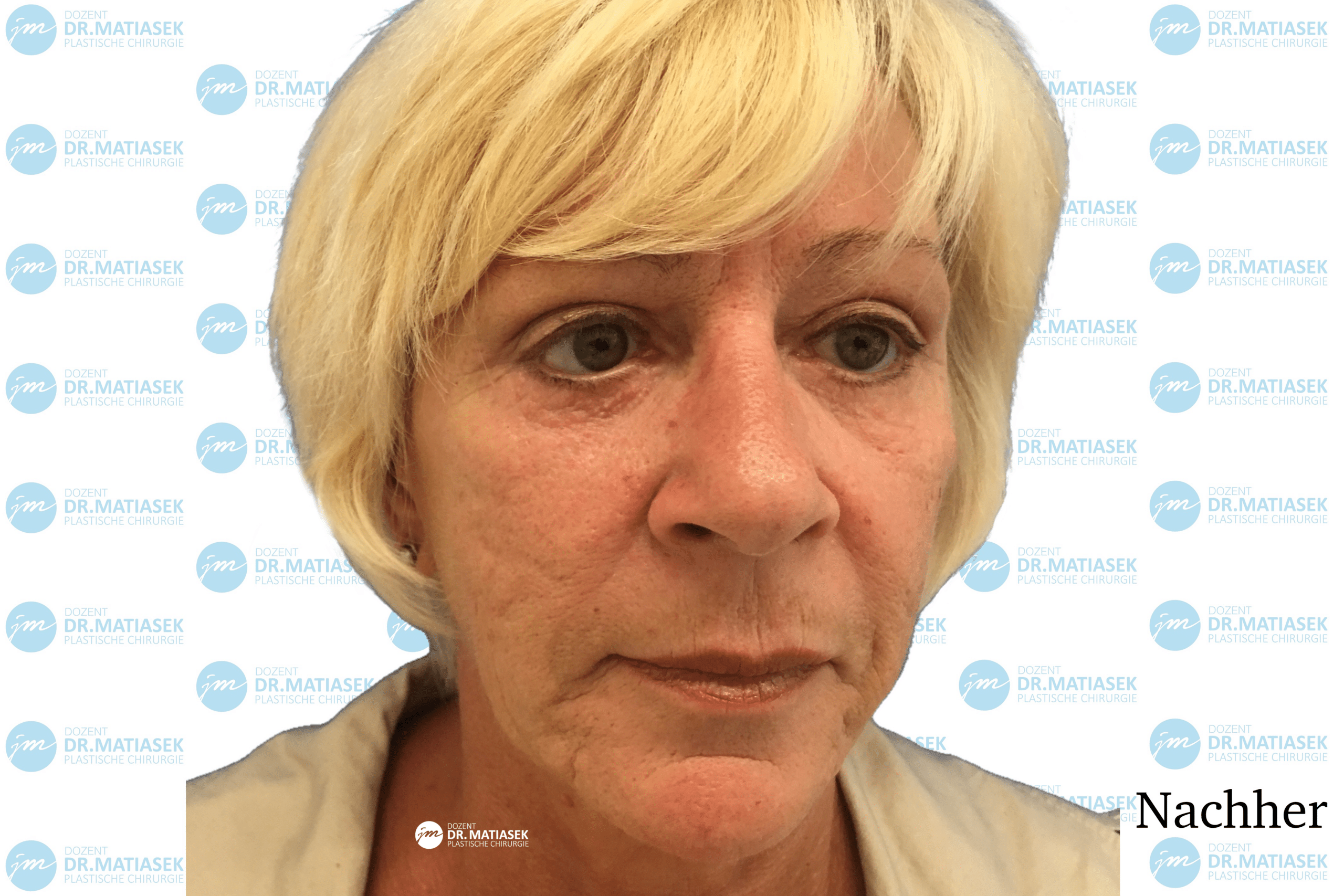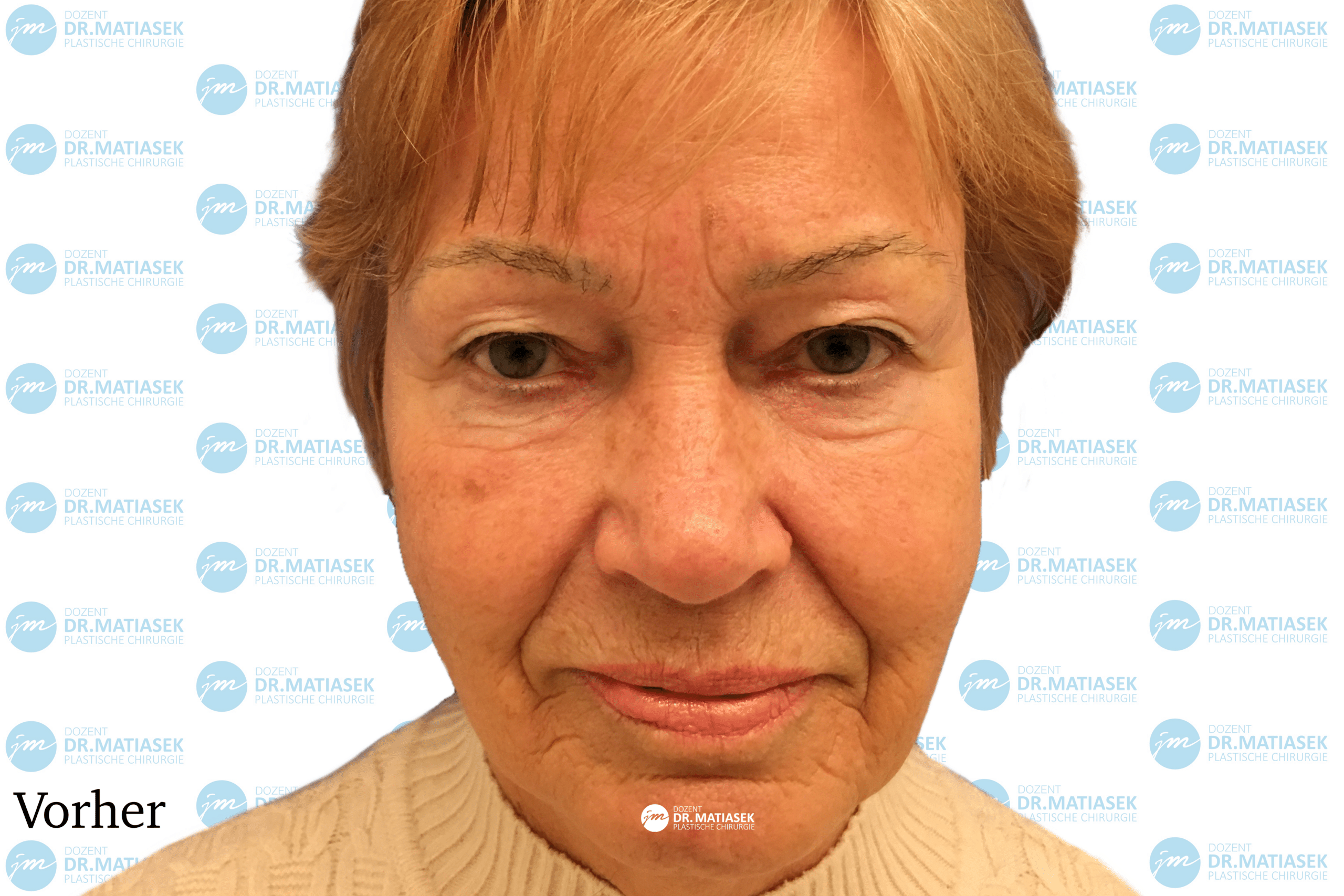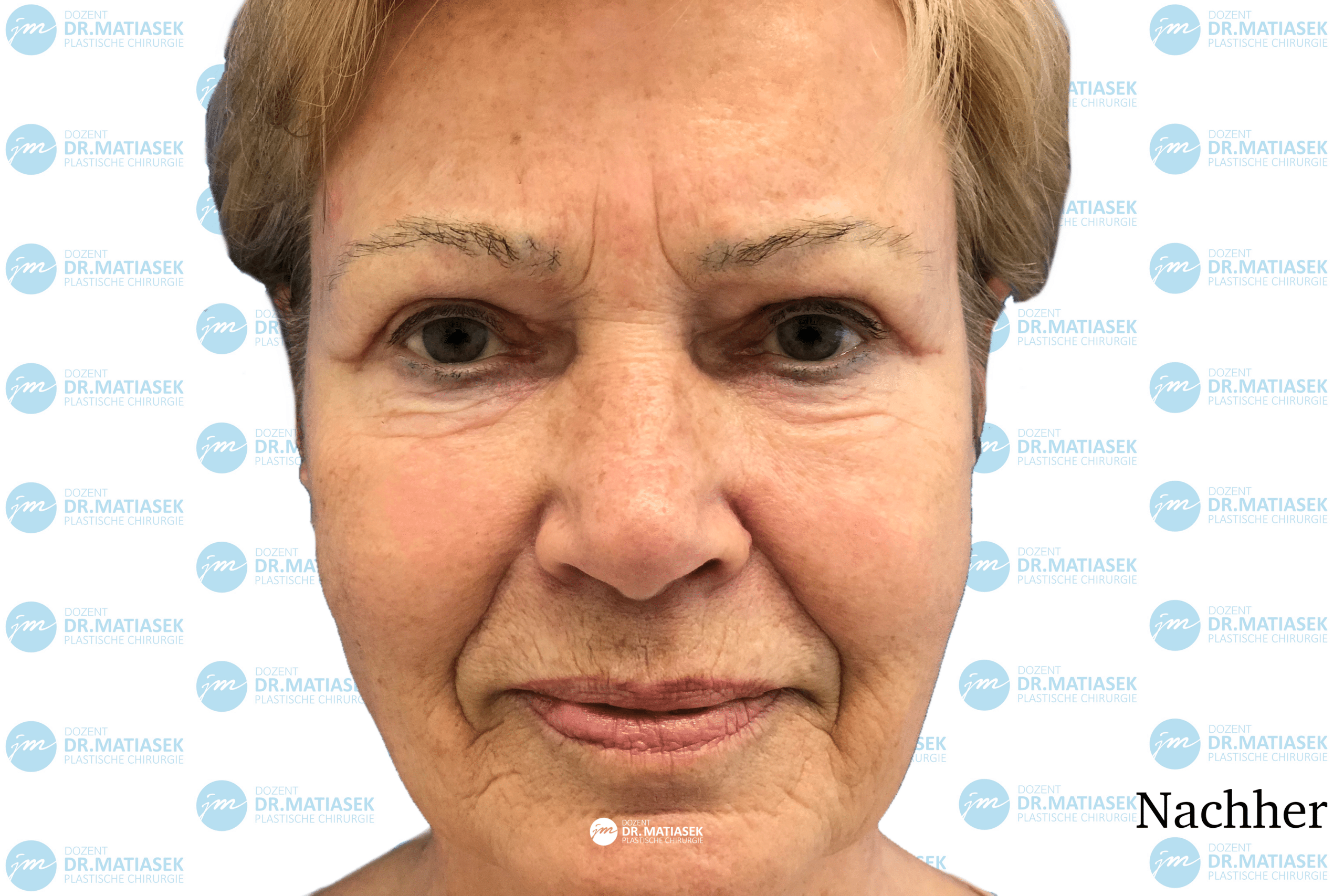
An open and alert look contributes significantly to an appealing appearance and it is not for nothing that we have the talent to cast a spell over our fellow human beings with our eyes. However, the natural aging process of the skin, an unhealthy lifestyle, or other factors such as excessive sun exposure all contribute to our losing our glowing gaze. The eyelids begin to droop and become increasingly slack, and wrinkles appear around the eyes. Bags and dark circles under the eyes form, which contribute to our looking tired and drained. In these cases, a comprehensive eyelid lift or an independent upper or lower eyelid lift can be performed. Whether bags under the eyes, drooping eyelids or crow’s feet – taking into account the tissue structures in the face, Dr. Matiasek gently models your eyelids so that your eyes can shine again in a completely natural way.
When is an eyelid lift used?
There are both aesthetic and medical reasons for an eyelid lift. The skin around the eyes is very thin and sensitive. Various environmental influences such as facial expressions, strong sunlight or the natural aging process have a strong influence on the skin, which gradually slackens it. The result is a tired facial expression, drooping eyelids, bags under the eyes and crow’s feet. For example, drooping eyelids are not only aesthetically annoying, they can also reduce the field of view. This leads to unconscious cramping of the forehead muscles, which in turn triggers tension headaches and migraines.
Whether drooping eyelids, bags under the eyes or crow’s feet – an eyelid lift can solve many problems. It is particularly suitable for significantly slackened skin in the eyelid area, for the correction of bags under the eyes and tear ducts, for severe and tired eyes or for swellings around the eye area. As part of an eyelid lift, excess skin, fat and muscle tissue in the eye area is removed and the skin is tightened at the same time – in this way a particularly harmonious and appealing result can be achieved.
Who is an eyelid lift suitable for?
An eyelid lift is basically suitable for all patients who are dissatisfied with the appearance of their eye area and who want a fresher and more alert look. The only prerequisites, however, are a minimum age of 18 years and a generally good state of health. The natural aging process begins as early as the age of 25, but its visible consequences, such as sagging skin and tissue in the eye area, only become apparent at an advanced age, which is why people aged 50 and over opt for an eyelid correction. However, there is no perfect age for an eyelid lift, as young people can also suffer from a loss of elasticity and have to struggle with small and tired-looking eyes. But even if you suffer from secondary symptoms such as tension headaches, migraines, corneal irritation, inflammation of the eyelid margin, incorrect head posture or a restricted field of vision, an eyelid lift is useful.
There are some cases in which eyelid surgery is not recommended as it would only increase the risks of the procedure unnecessarily. Above all, this includes various diseases such as diabetes or thyroid diseases and eye diseases that are associated with increased eye pressure. During the consultation, you will clarify with Dr. Matiasek whether you can have an eyelid lift.
What do I have to consider before the eyelid lift?
Dr. Matiasek conducts a detailed consultation with his patients before each treatment. This is first of all about the wishes and expectations you have of the procedure and what you would like to change. This is followed by a thorough examination of your eye area – so the treatment can be individually adapted to you. Dr. Matiasek will also explain the possible risks and complications of an eyelid lift and give you tips for optimal pre- and post-operative care.
The eyelid lift is not a major procedure, but there are a few points that you should consider in advance. For a period of about two weeks you should not use any blood-thinning medications such as aspirin, Sercatil, Voltaren or thomapyrin. During these two weeks you should reduce your consumption of alcohol and nicotine or stop them altogether. With these measures you can actively contribute to reducing the risk of possible complications as far as possible. On the day of the procedure, please come to the practice without make-up and remove your contact lenses if necessary. Please bring sunglasses so that you can protect your eyes from UV light after the eyelid surgery.
How does an eyelid lift work?
Depending on the individual starting position and the desired result, the eyelid lift works a little differently, as either only the upper eyelid or the lower eyelid or all in one can be tightened. However, the procedure is always carried out under local anesthesia or sedation and does not involve an inpatient stay.
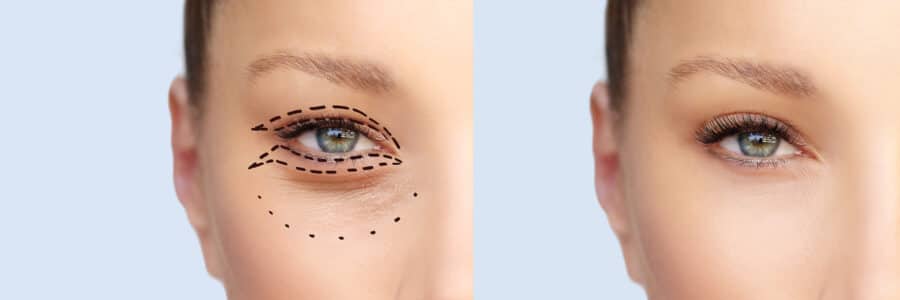
With the upper eyelid lift, the incision is made in the natural fold of the upper eyelid. to carefully remove the excess skin. The edges of the skin are then sewn in such a way that subsequent scars can only be seen very faintly or not at all. A lower eyelid lift, on the other hand, is carried out via a cut on the lower lash line, which extends to the inner corner of the eye. In the area of the lower eyelid, not only excess skin that needs to be removed, but also fatty tissue can be a problem. In order to be able to reposition these fat deposits, anincision is made on the inside of the lower eyelid.
A holistic eyelid lift consists of removing excess skin from the upper and lower eyelids and then tightening the skin, which also reduces wrinkles. In some cases, Dr. Matiasek will also remove already slack muscle tissue and excess fatty tissue from under the eyes. It is often useful to raise the eyebrows at the same time in order to achieve a harmonious appearance. You can discuss with Dr. Matiasek in your consultation whether a combined eyebrow lift is recommended in your case.
What are the complications and risks of an eyelid lift?
The eyelid lift is considered a relatively safe procedure, but of course it depends on the experience and expertise of the attending physician. But even with many years of experience in the field of eyelid correction and the conscientious adherence to hygiene standards, certain side effects and accompanying symptoms can never be completely ruled out. These include, for example, temporary pain, swelling, bluish discoloration around the eye area, temporary numbness from compressed nerves, slight bleeding or redness. The risk of anesthesia-related complications such as infection, allergies and intolerances may exist in principle; however, if you inform Dr. Matiasek in advance about known allergies or similar, he can significantly reduce this risk. You may experience dryness in the eyes in the first few days after the eyelid lift, which can be improved with eye drops. Other possible complications include burning and itching of the eyes, or excessive tearing.
What do I have to consider after the eyelid lift?
Since an eyelid lift takes place on an outpatient basis, you can leave the practice immediately afterwards – it is still advisable to take it easy for the time being. The healing time after an eyelid lift is between one and two weeks. After about a week the sutures will be removed by Dr. Matiasek. During this appointment, he will carry out a final follow-up check. During your consultation, Dr. Matiasek will explain to you what to expect after the eyelid correction and how you can support the healing process positively. In the first few days after the operation, you should cool your eyelids and protect your eyes with dark sunglasses. In principle, it is advisable to protect your eyes from strong sunlight for several weeks in order to contribute to the healing of the treatment area. Avoid using creams and make-up in the eye area or wearing contact lenses for the first few days. Although an eyelid lift does not require an inpatient stay, you should take it easy for at least two weeks and avoid physical exertion and sport – a visit to the sauna is also taboo for the time being.
When are the results of the eyelid lift visible?
Even if you can hardly wait to admire yourself in the mirror, you still have to be patient, because the result of the eyelid lift is not immediately visible after the procedure. You can notice the first changes after a few weeks, as most of the swelling, bruising and redness have subsided after this period; however, it usually takes about three months before the final result of the eyelid correction is visible. In rare cases, slight reddening may persist for a little longer – however, you can easily cover it with make-up and it is often not perceived as annoying.
One question that patients are naturally very interested in is how long the rejuvenating effect of the eyelid tightening will last. However, this is not so easy to say in advance, as it depends, among other things, on the condition of your skin and the progression of the aging process. However, there are certain measures you can take to increase the visibility of the result, such as a healthy lifestyle and extensive sun protection. As a rule, however, you can enjoy the results of the eyelid lift for between 10 and 15 years.
An eyelid lift can give your eyes the necessary contour that gives you an open, alert and radiant look. Dr. Matiasek looks forward to inviting you to a non-binding consultation and to creating an individual treatment plan for you!